
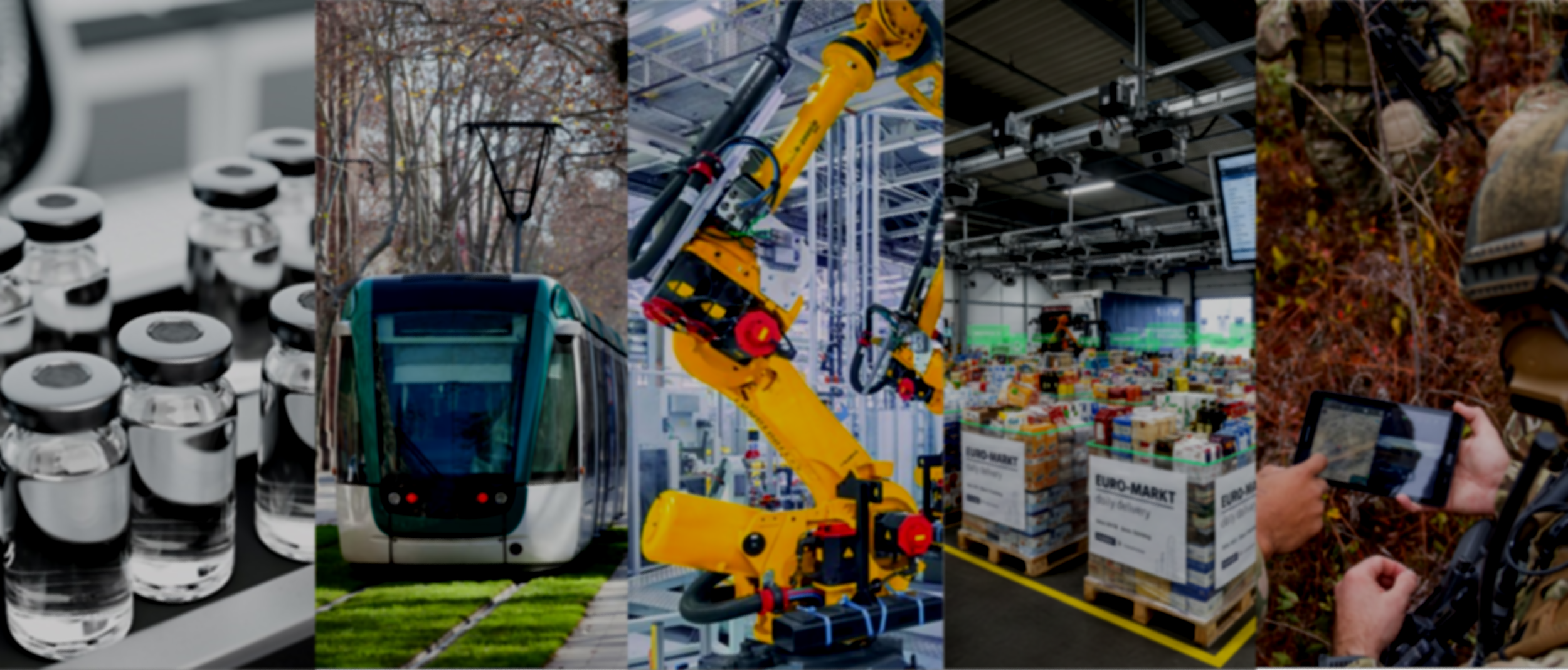
Making People Safer, Healthier, and More Capable Where It Matters


WAREHOUSES, LOGISTICS & TRANSPORT
The Challenges
Manual counting consumes multiple hours per facility per day, creating 4–6 hour delays in inventory accuracy and pick failures that cascade through just-in-time delivery models.
Multiple stakeholders independently recount the same inventory, generating distrust and redundant labor costs.
Mixed and modified inventory defeats barcode or RFID approaches.
Cloud-dependent vision systems introduce latency that prevents real-time decision-making at loading docks and violate data privacy requirements.
Use Cases & Capability Mapping
Reality Capture + World Localization + Transparent Object Perception + Edge Computing (privacy & latency)
-
Camera-mounted reach trucks and forklifts use World Localization + Reality Capture to continuously scan and map inventory as they traverse the warehouse, eliminating scheduled count cycles and providing a real-time digital twin of stock positions
-
Fixed cameras at loading docks leverage Reality Capture + Pose/Shape Detection to automatically identify, measure, and assess incoming goods against purchase orders, including mixed containers and modified materials (e.g., custom-cut lumber, partial pallets).
-
Edge-processed vision at pick stations validates item identity and quantity in real time, catching pick errors before they enter the distribution chain and eliminating secondary manual verification.
-
Meridian's transparent object perception enables accurate counting and condition assessment of glass bottles, plastic packaging, and other materials that defeat conventional CV solutions.


PRODUCTION LINES: QA/QC
The Challenges
High-speed production lines require sub-second defect detection, but conventional computer vision fails on transparent, reflective, and smooth-surfaced products, creating blind spots in quality gates.
Cloud-dependent inspection systems introduce latency that makes real-time reject decisions impossible at hundreds of units per minute.
Complex 3D geometries require multi-angle inspection but current systems depend on fixed single-viewpoint cameras.
Use Cases & Capability Mapping
Transparent Object Perception + Low Latency (edge) + Pose/Shape Detection + Hardware Agnostic deployment
-
Meridian's transparent and complex object perception enables real-time QA of glass bottles, plastic packaging, vials, and light bulbs at production speed; addressing a documented capability gap.
-
On-device processing eliminates cloud round-trip latency, enabling pass/reject decisions within the performance window required by high-speed conveyor systems without sacrificing detection accuracy.
-
Pose/Shape Detection combined with Reality Capture provides 3D product verification from multiple camera angles, catching orientation-dependent defects that single-viewpoint systems miss.
-
Reality Capture validates that product labels, fill levels, and packaging conform to specifications, integrating with line control systems for automated rejection.
The Challenges
Event operators face 600% inflation in security staffing costs over three years while regulatory requirements mandate more personnel.
Current crowd monitoring solutions require cloud-based video processing, creating a fundamental tension with European public space privacy regulations.
Indoor venues lack GPS coverage, preventing conventional navigation and crowd-flow analytics in precisely the environments where density management is most critical.
Use Cases & Capability Mapping
Motion Analysis + Edge Computing (privacy) + World Localization + Hardware Agnostic (consumer phones)
CROWD MANAGEMENT & PUBLIC SAFETY
-
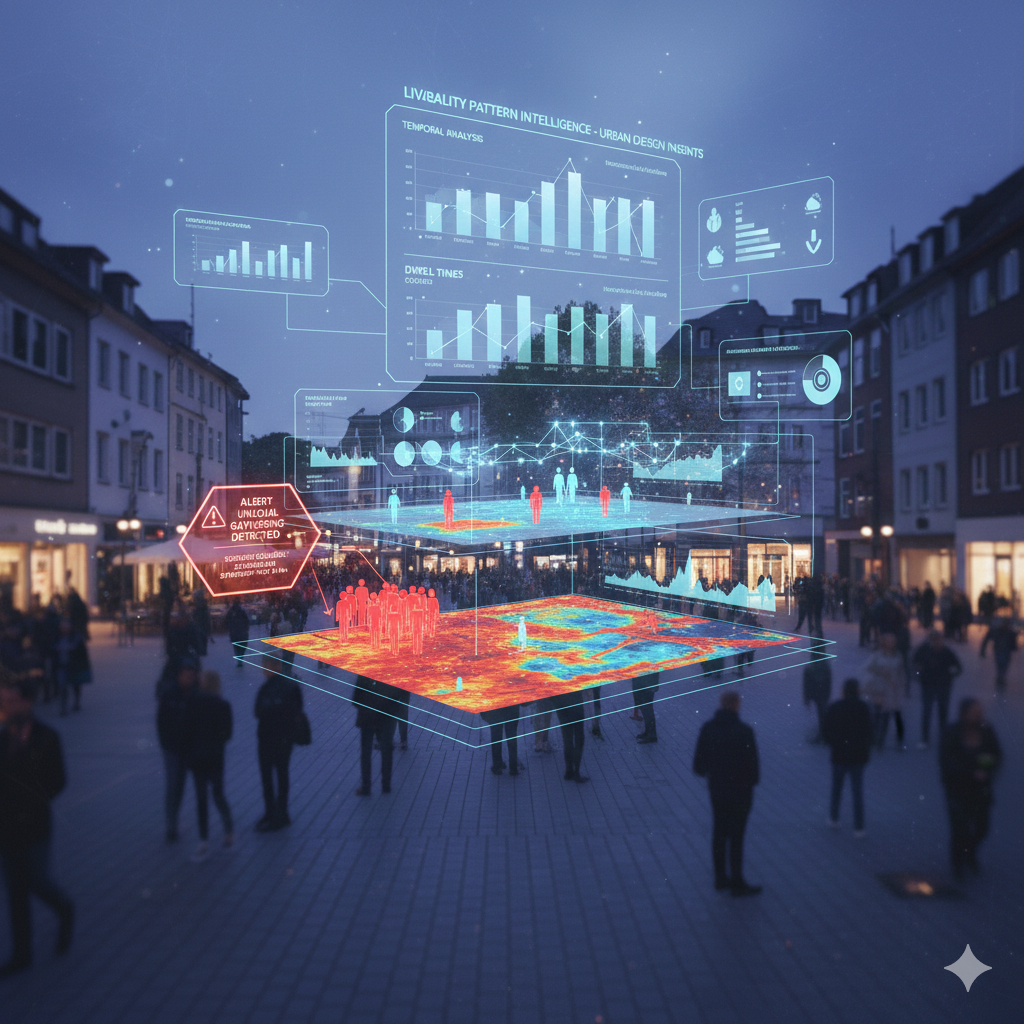
Motion Analysis on edge devices creates live foot traffic heatmaps across public spaces and event venues, enabling security teams to identify dangerous density buildups before they become critical — without transmitting video to the cloud.
-
On-device processing provides crowd flow intelligence for safety and livability pattern intelligence with full GDPR compliance. Data is anonymized at source; if no event occurs, footage is deleted on-device.
-
World Localization enables phone-based wayfinding in stadiums and transit centers where GPS fails. Users scan their surroundings and the model (trained for that facility) provides turn-by-turn navigation.
-
Motion Analysis + Reality Capture enables automated entry/exit counting and flow pattern analysis to optimize gate assignments, concession placement, and evacuation routing.
HEALTHCARE FACILITIES
The Challenges
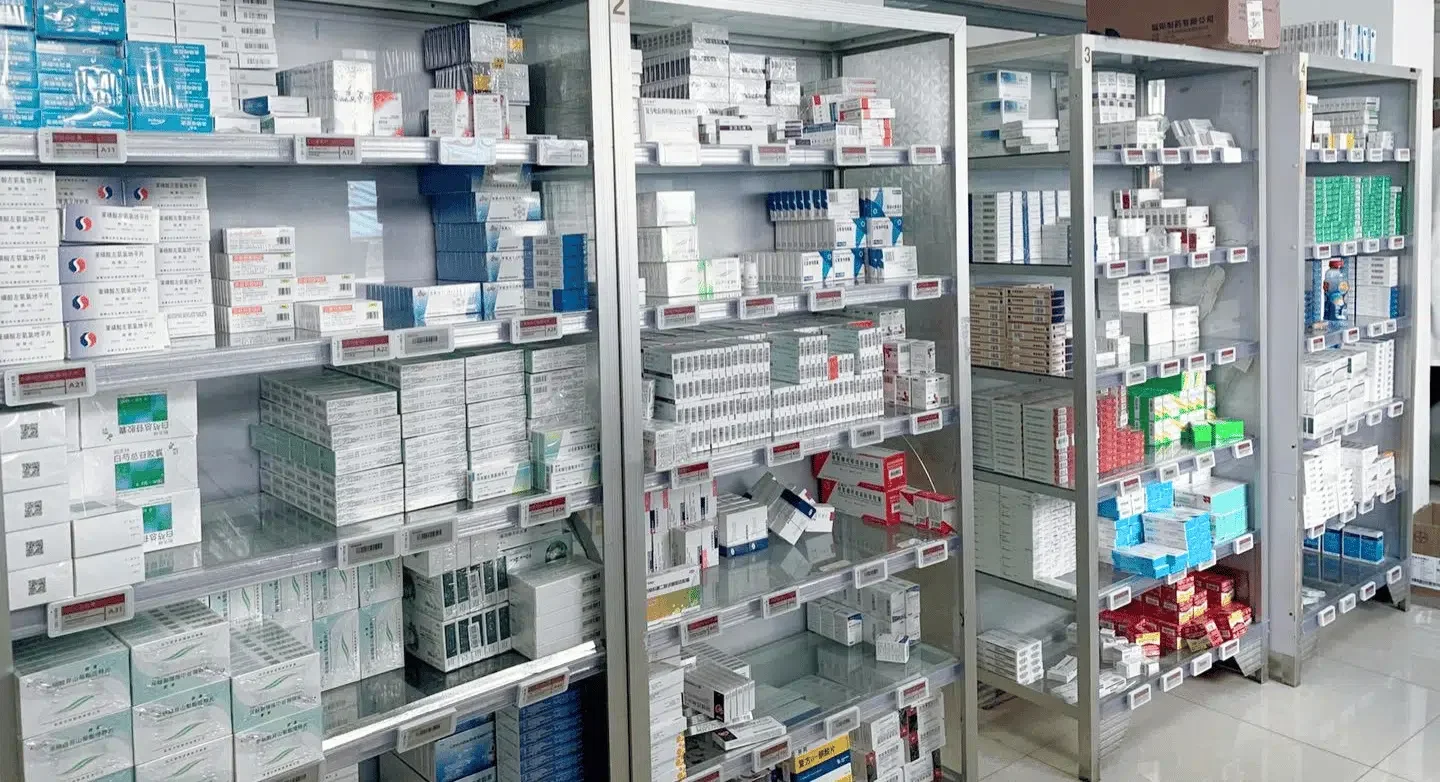
Hospital pharmacies manage thousands of SKUs including transparent vials, blister packs, and look-alike medications prone to manual counting errors.
Surgical instrument tracking relies on manual counts unreliable for sterilized, reflective metal instruments, retained instruments represent serious patient safety risk and malpractice liability.
Healthcare environments demand absolute data privacy: patient-facing cameras cannot transmit video to external cloud services under GDPR and medical data regulations.
Use Cases & Capability Mapping
Transparent Object Perception + Pose/Shape Detection + Edge Computing (privacy/compliance) + Reality Capture
-
Reality Capture + Transparent Object Perception enables real-time counting and identification of glass vials, ampoules, and transparent packaging that defeats conventional barcode/RFID approaches, maintaining perpetual inventory accuracy.
-
Pose/Shape Detection identifies and counts reflective, metallic surgical instruments pre- and post-procedure, providing automated tray verification that reduces retained instrument risk.
-
Edge-processed Motion Analysis enables fall detection and patient activity monitoring without any video leaving the facility, meeting GDPR and medical data privacy requirements by design.
-
Reality Capture validates incoming pharmaceutical shipments against orders, detecting counterfeits, verifying expiry dates, and maintaining chain-of-custody documentation automatically.
DEFENSE & SECURITY
The Challenges
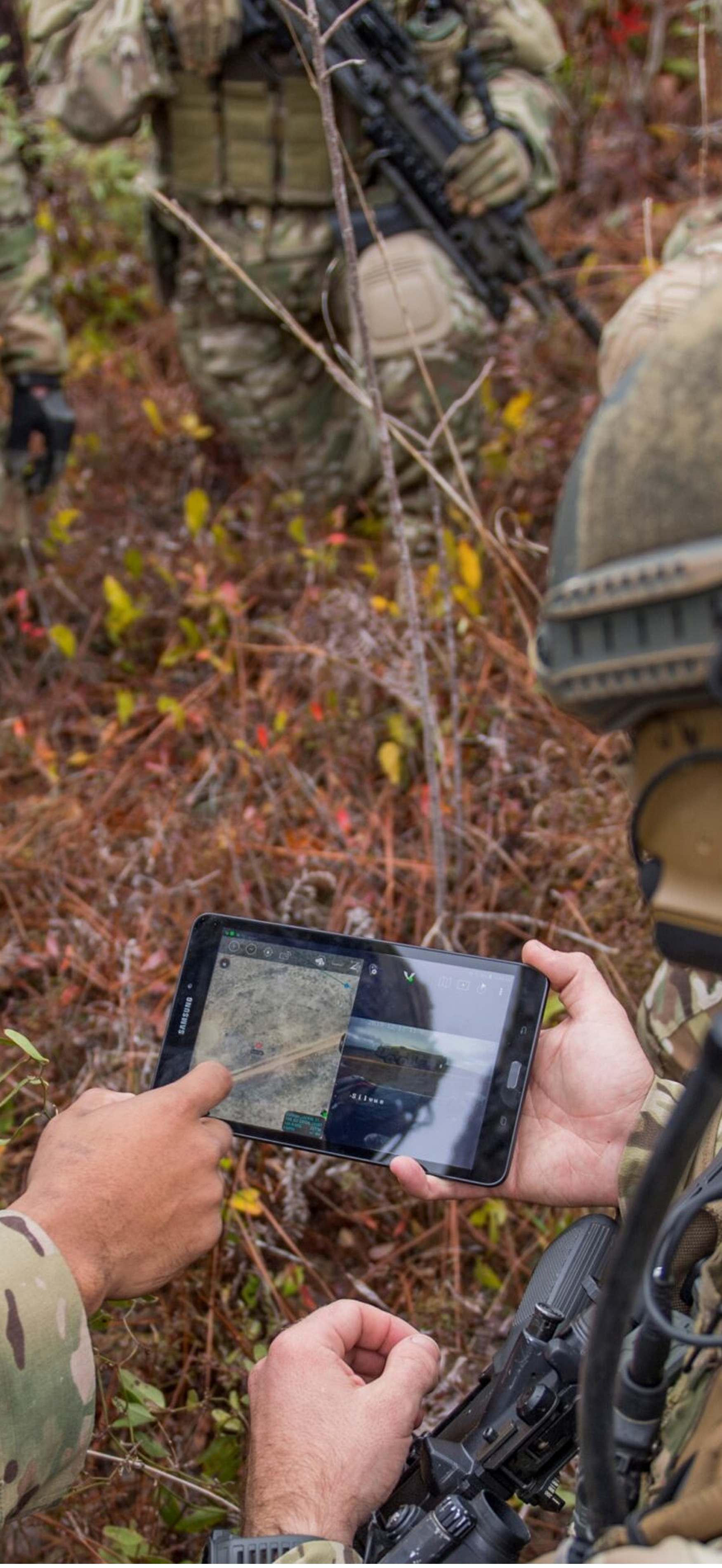
Field operations cannot rely on cloud-dependent CV: connectivity is unreliable, bandwidth is limited, and transmitting video to external servers violates OPSEC.
The civilian property security market creates GDPR violations by transmitting video of public spaces to third-party servers before anonymization.
Security staffing costs have inflated approximately 600% over three years in Europe, driving demand for automated threat detection.
Use Cases & Capability Mapping
Edge Computing (zero cloud dependency) + Motion Analysis + World Localization + Hardware Agnostic + Privacy-by-Design
-
Motion Analysis + Edge Computing enables lightweight early warning systems that detect movement patterns and anomalies without any cloud dependency, operating solely on equipment carried by the unit.
-
World Localization provides spatial awareness in environments where GPS is unavailable or jammed (underground facilities, dense urban terrain, electronic warfare scenarios).
-
Edge-processed security cameras analyze and anonymize video on-device before any transmission, enabling monitoring that is GDPR-compliant by design.
-
On-premise processing enables commercial and industrial facilities to maintain 24/7 visual monitoring without exposing any footage to external networks, meeting both GDPR and corporate data governance requirements.